
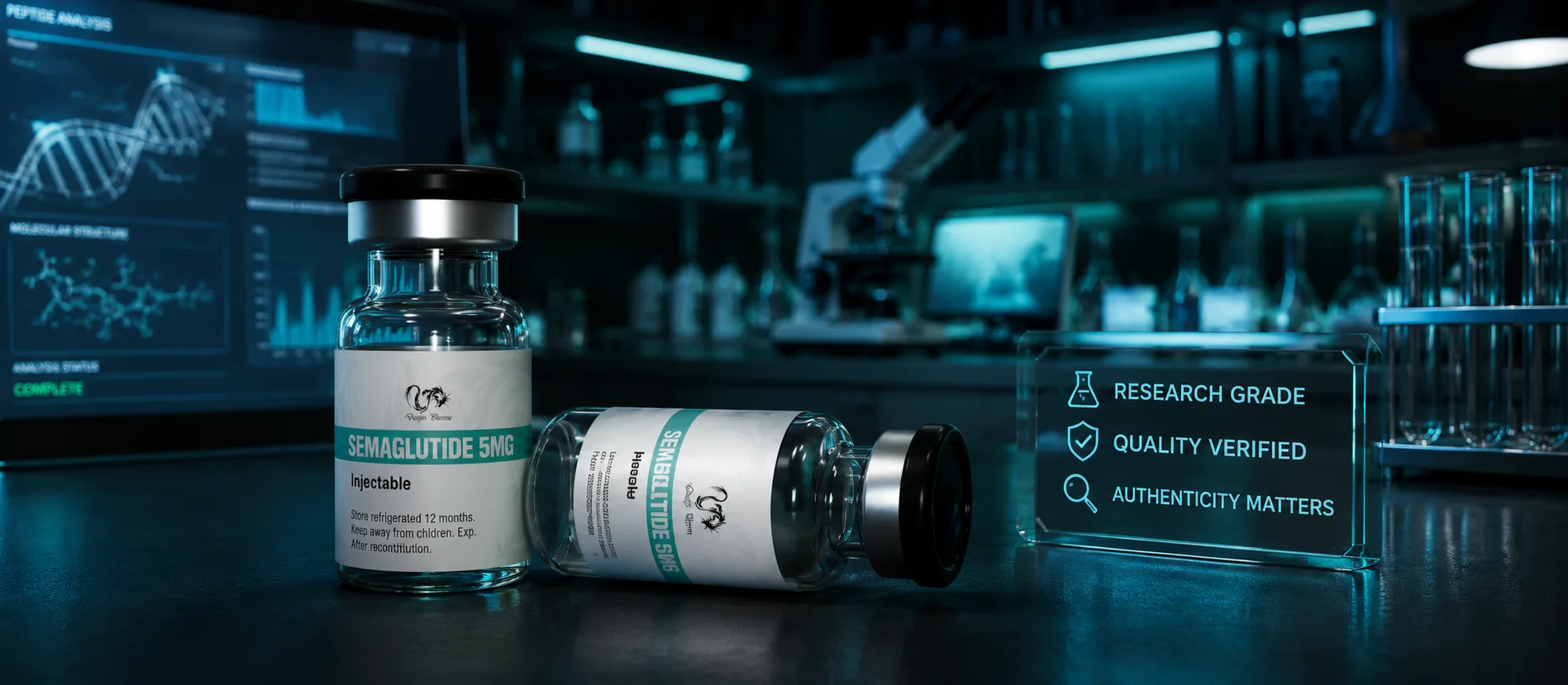
Dragon Pharma Semaglutide: A GLP-1 Product Review
A Grey-Market GLP-1 Under the Microscope
GLP-1 medications have moved from diabetes clinics to mainstream weight-loss conversations, and the grey market followed quickly. Dragon Pharma Semaglutide is one of the research-labeled versions that now circulates in fitness communities, and it draws questions that a straight review can help answer: what the product actually is, how buyers verify it, what results and side effects users report, and where the real risks sit. Nothing here is medical advice or a recommendation to self-administer semaglutide. This is a summary of public discussion, and semaglutide is a prescription medication that should be used under a licensed physician.
What Is Dragon Pharma Semaglutide?
Semaglutide is a GLP-1 receptor agonist, the same class of compound behind well-known prescription weight-loss and diabetes drugs. It works by mimicking a gut hormone that slows digestion and reduces appetite, which is why users associate it with reduced hunger and gradual weight loss. Dragon Pharma Semaglutide is the brand's grey-market, research-labeled version of that compound — not a pharmacy prescription and not FDA-approved product.
The distinction matters more here than with most compounds. Licensed semaglutide goes through regulated manufacturing and comes in pre-dosed pens; a research-labeled vial does not carry those guarantees, so purity and dosing accuracy fall on the buyer to verify. This is the central theme of the community discussion around it.
Because it is sold in the same catalogs as the brand's other products, buyers who already source from the label tend to add it out of convenience — which is exactly why an honest look at verification and side effects is worth the space below.
Presentation and Reconstitution
Research semaglutide typically ships as a lyophilized (freeze-dried) powder in a small vial, most often labeled in the single-digit to low-double-digit milligram range per vial, and it usually arrives with a separate vial of bacteriostatic water for reconstitution. The powder has to be mixed before use, and community threads spend a lot of time on getting that step right. Familiar with peptide reconstitution? It is the same process our BPC-157 review covers.
The recurring points buyers raise:
- 1Reconstitution math: users stress calculating the concentration carefully, because a mistake here changes every subsequent dose.
- 2Storage: reconstituted peptide is generally kept refrigerated, with community members noting it degrades faster once mixed.
- 3Visual check: clear solution after mixing is expected, and cloudiness or residue is treated as a red flag.
Getting this wrong is the most common self-inflicted problem reported with any research peptide, semaglutide included. Several members note that dosing errors — not the compound itself — cause most of the alarming early experiences.
Community-Reported Dosing and Titration
Dosing is where a review has to be careful, because bad numbers cause real harm. The consistent theme in community discussion is slow titration: users describe starting low and increasing gradually over weeks to limit nausea, mirroring the escalation schedule used with prescription versions.
Start low, go slow. The users who report the worst nausea are almost always the ones who jumped to a high dose instead of titrating up over several weeks.
Two cautions dominate the threads:
- 1Titration prevents most side effects: rushing the dose is the single most-cited cause of severe nausea and vomiting.
- 2Individual response varies widely: what one person tolerates, another does not, which is why members reject one-size-fits-all protocols.
These are community-reported patterns, not a protocol to copy. Semaglutide affects blood sugar, gallbladder function, and digestion, and titration for prescription use is done under medical supervision for good reason. Anyone considering it should have that conversation with a physician rather than rely on forum consensus.
Verifying Authenticity
Verification for a research peptide is harder than for an oil-based steroid, because you cannot judge dosing by feel and the compound is a white powder that looks identical whether it is pure or not. Dragon Pharma products generally carry a scratch-off verification code meant to be checked on the official brand checker, and the same rules apply as with the rest of the catalog.
How buyers approach it:
- 1Code check first: validate the scratch-off code as unused, while knowing codes can be cloned on sophisticated fakes.
- 2Packaging and powder: inspect the seal, label print, and whether the lyophilized cake looks intact rather than melted or discolored.
- 3Lab testing for certainty: the only reliable confirmation of a peptide's identity and purity is third-party testing, which the most cautious buyers pay for.
Our separate Dragon Pharma authentication guide covers the code-check process in full. For semaglutide specifically, the honest summary is that visual inspection tells you little, so verification leans harder on the code and on lab testing than it does for injectables.
Community Feedback: Reported Results
Sentiment on authenticated Dragon Pharma Semaglutide skews positive on the results front, with the same caveat that these are anonymous self-reports rather than trial data. The praise mirrors what is documented for the drug class generally.
What users report liking:
- 1Appetite suppression: the most consistent effect described, with members noting reduced cravings and smaller portions within the first weeks.
- 2Gradual weight loss: steady rather than dramatic, which experienced users frame as the healthier pattern.
- 3Convenience and price: far cheaper per milligram than pharmacy pens, which is the main reason buyers take the grey-market route.
The weight-loss reports are broadly in line with how the compound behaves in medical use, which lends the positive feedback some credibility. Still, results depend entirely on the product being genuine and correctly dosed — the two things the buyer alone is responsible for.
Community Feedback: Side Effects and Complaints
The complaint side is substantial and deserves equal weight. Semaglutide has a well-known side-effect profile, and community reports track the medical literature closely.
Where the problems land:
- 1Gastrointestinal effects: nausea, vomiting, constipation, and reflux are the most reported, usually worst when titration is rushed.
- 2Fatigue and appetite loss overshoot: some describe eating too little and feeling drained, which they treat as a sign to adjust down.
- 3Dosing-error incidents: the harshest experiences almost always trace back to reconstitution mistakes or aggressive dosing rather than the compound itself.
- 4Verification friction: as with the rest of the catalog, failed or already-used codes generate distrust about a given unit.
The pattern is consistent with the brand's other products: authenticated, correctly handled units perform in line with expectations, while the bad outcomes concentrate around fakes and user error. Serious or persistent side effects are a reason to stop and seek medical care, not to push through.
Pricing and Availability
Pricing is community-reported and varies with the reseller, vial size, and order volume, so treat any figure as a rough reference. The consistent point members make is that grey-market semaglutide costs a fraction of prescription pens per milligram, which is the core of its appeal and also the reason the market attracts counterfeiters.
Two familiar cautions apply:
- 1Unusually cheap listings are treated as bait for underdosed or fake powder.
- 2Source reputation outweighs price, exactly as with the injectable and oral lines.
We do not link to sellers, and readers should be aware that buying and self-administering prescription medications like semaglutide is regulated or illegal in many countries. Price is covered here only to explain the market dynamics, not to encourage a purchase.
Semaglutide Compared to Other GLP-1 Options
Buyers frequently weigh semaglutide against the newer GLP-1 compounds rather than against steroids. The practical differences come down to potency and how established each one is.
Semaglutide
Once-weekly GLP-1
Most established, largest track record
Tirzepatide
Dual GIP/GLP-1
Reported as stronger, newer to grey market
Prescription pens
Regulated, pre-dosed
Safer benchmark, higher cost
Semaglutide is the most discussed and best-documented of the grey-market GLP-1 options, which is part of why buyers gravitate to it first. Tirzepatide is reported as more potent but has a thinner community track record. Prescription pens remain the safest route by a wide margin because dosing and purity are controlled — a point worth keeping central to any decision.
FAQ
Frequently Asked Questions
It is the brand's grey-market, research-labeled version of semaglutide, a GLP-1 receptor agonist used for appetite suppression and weight loss. It is not a pharmacy prescription or FDA-approved product, so purity and dosing accuracy depend on the buyer verifying the unit.
Prescription pens are regulated, pre-dosed, and quality-controlled, while research vials arrive as a powder the buyer must reconstitute and dose themselves. That shifts the entire burden of accuracy and purity onto the user, which is the main risk community members flag.
Gastrointestinal effects lead the list — nausea, vomiting, and constipation — usually worst when the dose is increased too quickly. Users consistently report that slow titration prevents most of these, and that severe or lasting symptoms are a reason to stop and see a doctor.
They check the scratch-off code on the official brand checker, inspect the seal and the lyophilized powder for damage, and — for real certainty — pay for third-party lab testing. Because the powder looks identical whether pure or not, visual checks reveal little on their own.
It carries meaningfully more risk than prescription semaglutide because purity, dosing, and handling are unverified. Semaglutide is a prescription medication for a reason, and anyone considering it should consult a licensed physician rather than rely on community protocols.
DragonPharma.review is an independent review and information platform. We are not affiliated with Dragon Pharma, Dragon Pharma Labs, its owners, manufacturers, distributors, or retail partners. This content is for informational and review purposes only.
Editorial Team
Editorial Staff
Editorial team
Comments (0)
Be the first to comment on this article.